
How International Life Shapes Personal Identity
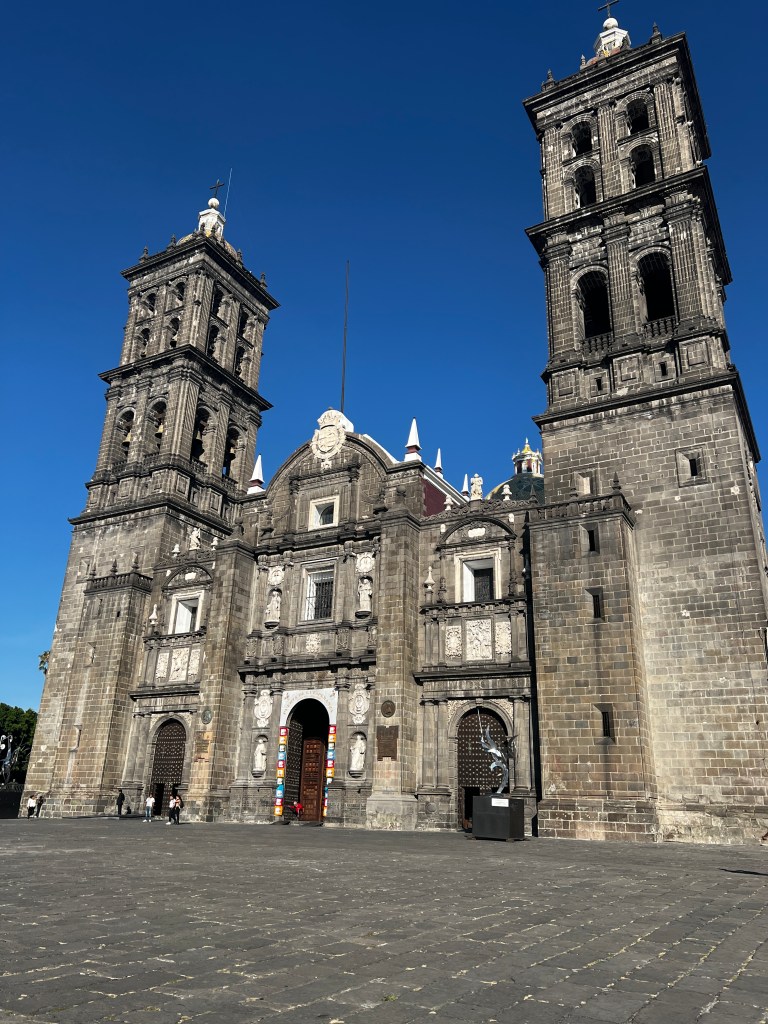
When I first moved from the U.S. to Mexico, I did so in a blaze of glory. I quit my job, sold my house, got rid of about 90% of my worldly possessions, and packed as much as I could into, on top of, and hanging off the back of my Ford Escape. My daughter, our two dogs, and I hit the road, driving toward a future that had been calling to me for years.
But knowing I was moving toward something didn’t mean I knew exactly how to create it. I thought my new life had to be one or the other—I had to be either American or Mexican. I had to let go of one world to embrace the other completely. It wasn’t until I went back to Texas for Christmas, just four months after my move, that I realized how wrong I was.
I missed things I hadn’t even considered before. Not just my friends or family, but the little, everyday things that are so woven into our cultural fabric we don’t even realize their importance until they’re gone. Like eggnog. I didn’t realize it then, but man oh man, I really love eggnog around the holidays. (And let’s be clear: although Rompope is delicious, it is not the same as eggnog).
But it wasn’t just about food or traditions—it was about feelings, exchanges, and unspoken understandings. It was about those moments when a song comes on the radio and you are transported back to a different time in your life, vivid with images and memories. It was about inside jokes, sayings, and references that make up the invisible threads of a culture. And in Mexico, I was suddenly aware of how often I was outside of those moments.
I’d be standing in a group of people in a public place (i.e. bar) when a song would come on, and suddenly, everyone around me would spring to life, singing along, transported to some point in time that connected them all with a knowingness that, even if explained, wouldn’t fully be understood. And I’d be left standing there, a little lost, because it obviously wasn’t just about the song—it was about what it represented.
While cultural explanations can help me understand the emotions or the links, they don’t make me fully feel the same way that it makes them feel.
At first, that realization made me feel like an outsider. But then, I started to see things differently.
Embracing the Duality
For a long time, I thought belonging was a fixed state. You were either part of something, or you weren’t. You either understood the cultural shorthand, or you didn’t. But moving to Mexico taught me that identity isn’t about fitting neatly into one place—it’s about learning how to exist in the spaces between.
I realized I had those same moments of shared nostalgia in the U.S. too—songs, sayings, and commercials that instantly transport me back in time.
Take Grey Poupon commercials from the late ’80s. We’ve had a number of my friends come and stay with us in Mexico, and every time I pull out a jar when making burgers with our guests, everyone immediately begins remarking about how popular Grey Poupon used to be, and did we remember the commercials, and the of course, “Pardon me, but do you have any Grey Poupon?”—and we all laugh, instantly connected by a shared cultural reference.
I’ve tried explaining it to my Mexican partner, Edgar. How the Grey Poupon TV ads were marketing genius, searing this image into American minds of affluent Brits stopping traffic just to get their hands on fancy mustard that clearly needed to be a staple in our refrigerator. But despite my best efforts (and after about five explanations), he doesn’t fully get it. And why would he? He’s never seen the commercials or experienced U.S. TV culture from that time.
What he has seen, though, is every American guest in our home reacting the same way when I pull out the small jar of delicousness. And honestly, that’s just as funny. He now knows how all of the gringos are going to react on hamburger night when we pull out the Grey Poupon.
So, instead of seeing those moments as barriers, I started embracing them as opportunities—to learn, to connect, and to appreciate culture in a way that people who never leave home might not even recognize. More importantly, I started to see my own life differently.
I wasn’t running away from the U.S. I wasn’t rejecting my roots. I wasn’t choosing Mexico over America.
I was choosing something bigger. Something magical. I was choosing Grey Poupon.
Just kidding!
I was choosing an international life—one where I could flow between cultures, languages, and identities without having to give up any part of myself. And I realized that what truly anchored me wasn’t a country or a passport.
I was creating an international lifestyle. I was redefining my idea of “home”.
The New Definition of Home
For most of my life, “home” meant one place: a specific house, a country, a familiar rhythm of life. It was tied to traditions, routines, and an unspoken understanding of how things worked. But the more time I spent living between two worlds, the more I realized that home isn’t just a place—it’s something we create.
It’s not geography that makes me feel grounded. It’s the way I live.
Whether I wake up in Mexico or Texas, my day starts the same way—with morning coffee, quiet reflection, working on myself, writing, and time spent with my dogs. I complete my work remotely. I cook the foods that nourish me, choose a daily movement practice that aligns with me for that day, and structure my workdays in a way that makes me feel productive and fulfilled. My lifestyle remains constant, even when my location changes.
This realization changed everything for me. I don’t have to choose between the two worlds I love. My identity isn’t split between two countries—it’s expanded by them.
I’ve built a life where I can feel equally at ease sipping café de olla in a bustling Mexican market as I do ordering a drip coffee in a Starbucks in Texas. (To be honest, I also order Starbucks in Mexico, it’s very popular here as well.) I can choose where I want to spend certain times of the year, or certain holidays. I can choose where I want to receive medical care. I can choose where I want to buy friends’ holiday or birthday presents
The beauty of an international life is that it frees you from borders—not just physical ones, but mental ones, too. You stop seeing the world in terms of either/or and start embracing the and. You begin to appreciate how cultures weave together, how you can belong to multiple places at once, and how the things that once made you feel like an outsider actually make you wiser and, well, richer.
This world is opening up in ways it never has before. Remote work, digital nomadism, cross-cultural relationships—people are no longer defined by just one place. We are creating new ways to live, new ways to belong.
So if you find yourself straddling two cultures, wondering where you fit—know that you don’t have to pick a side. You don’t have to fit into a single mold.
You can have both.
You can have everything.
Because home isn’t a country, a single language, or a set of traditions.
Home is the life you build for yourself—wherever you choose to wake up.
 Gringa in Mexico
Leave a comment