
Are We Wired for Wander?

Some mornings when I wake up, there’s a brief moment — that hazy, in-between place — where I can’t quite remember which country I’m in. Sometimes I feel like I’m in both at the same time. It’s not disorienting in a bad way… it’s more like a soft blur between worlds.
It happened to me this morning just as I was waking — that in-between space where dreams still linger and you are caught between the dream state and reality, that magical space where, if you are lucky enough, the universe talks to you and whispers its secrets.
I had been dreaming about travel, movement, and freedom—about the desire so many of us feel to explore something new, to be somewhere else, to taste something different, to experience the world. As I began to wake up, this question flowed into my thoughts, “Why? Why do we have this desire?”
And in that quiet, sublime space, I felt my daughter’s voice speak to me, telling me that it’s because we used to be nomads, we used to live as nomadic tribes, and that we wandered the earth in small bands, bound together by community and the need to survive.
“It’s because that’s who we are. That’s who we’ve always been.”
And that woke me up.

Are We Meant to Wander?
Lying there in the stillness of morning, I couldn’t shake the feeling that this was more than just a random thought. It felt ancient. Like a memory woven deep into our bones.
I began to wonder…
Is our desire for travel, for movement, for an international or nomadic lifestyle…simply wanderlust? Or is it something deeper, actually ancient? Is it imprinted in us at a cellular, even ancestral, level?
Is this restlessness not a flaw of modern life — but rather an echo of how we once lived?
Our Nomadic Roots
Here’s where it gets fascinating.
Anthropologists estimate that for roughly 99% of human history, we were nomadic. Wanderers. Migrating with the seasons, with the animals, with the rhythms of nature.
Staying still for long periods? That’s a relatively new concept in human history.
Early nomadic tribes had to embody adaptability, creativity, and problem-solving on a daily basis. Survival depended on it. New landscapes required new skills. New tribes meant new relationships. Every sunrise brought the possibility of change — and they met it with curiosity, resilience, and ingenuity.
This might help explain why, in a world designed for stability, mortgage payments, and office cubicles, so many of us feel that familiar tug:
“There has to be more.”
“I want to see the world.”
“I feel most alive when I’m somewhere new.”
Maybe it’s not escapism. Maybe it’s remembering.
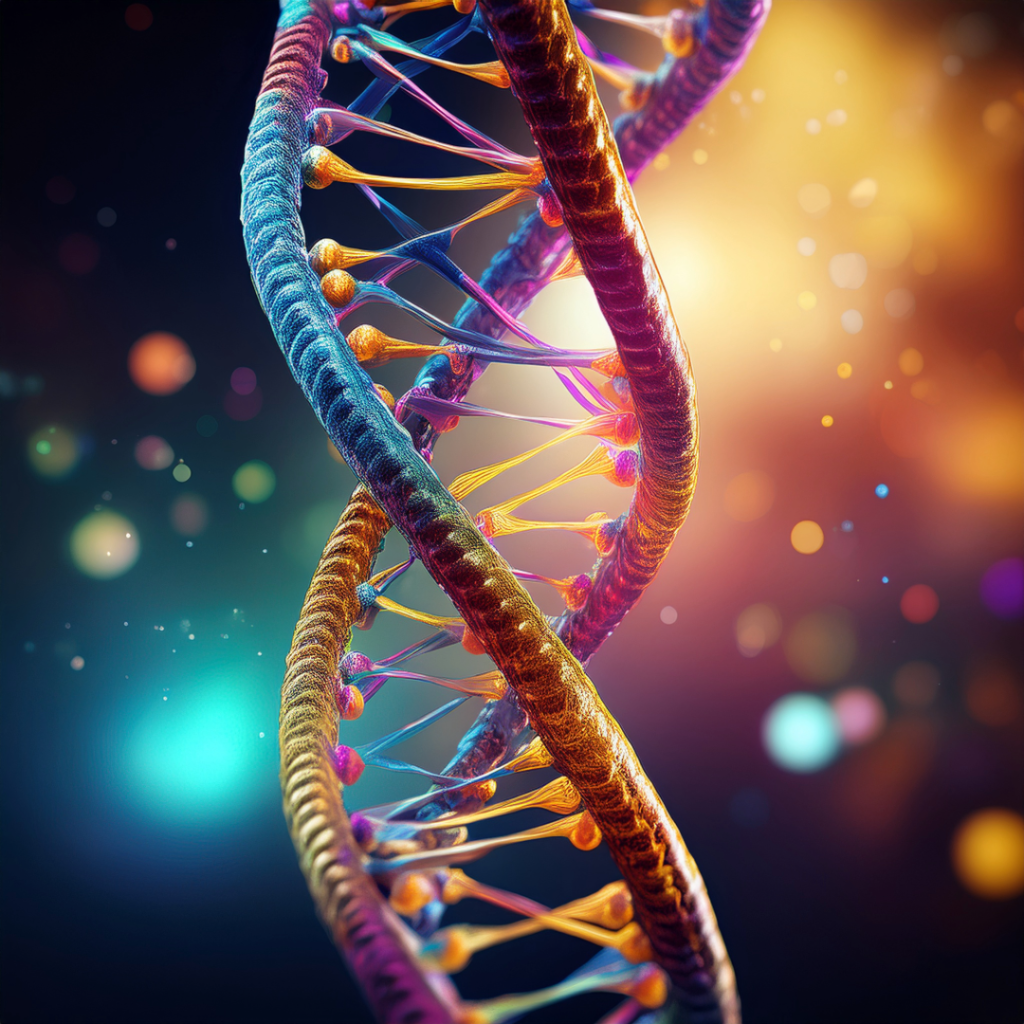
The Nomadic Code Within Us: The DRD4-7R Gene Variant
There’s even some science to back this up.
DRD4-7R, often called the “wanderlust gene,” has been linked to novelty-seeking behavior. The 7R allele has been thought to have originated as a rate mutational event, found primarily in populations with a history of long-term migrations. The DRD4 gene function controls dopamine levels, which regulate reward and pleasure centers in the brain.
Studies show it’s more common in populations with a history of migration. For example, according to NIH, this genotype is found more frequently in populations who had to take great risks to travel long distances, such as the early immigrants to the Americas (link to source here).
It’s not all sunshine and rainbows if you have this gene mutation. It has been linked to a number of behavioral traits and “disorders”, such as ADHD, risk-taking behavior, substance abuse (including alcoholism), OCD, separation anxiety, increased levels of physical activity, and increased reactions to environmental factors.
But the DRDR-7R gene also has been associated with positive qualities as well. Creativity, curiosity, adaptability, resilience, adventurousness, open-mindedness, and an entrepreneurial spirit are some positive ways that characteristics of this gene can express themselves.
If you have the DRD4-7R gene variant, this can definitely impact your desire to travel and seek new experiences. Individuals with this variant may have a lower sensitivity to dopamine, leading them to seek out adventurous and novel experiences to get a “rush”. This may manifest as a strong inclination to travel, explore different cultures, and try new things.
But I think that even if you don’t have this gene, that doesn’t mean that you can’t be lured by the idea of moving to another country or possibly creating an international lifestyle that was shaped by our ancestors and our need for survival.
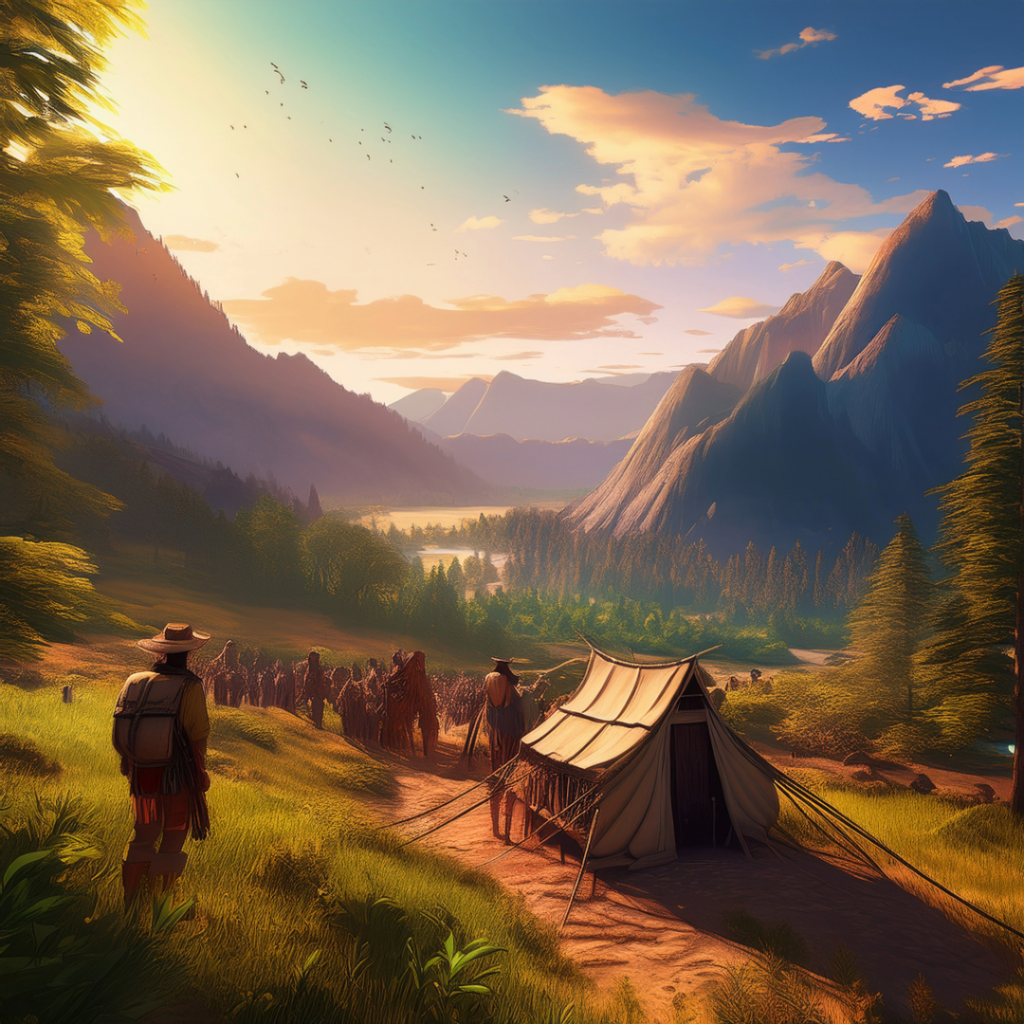
Research on Nomadic Tribes and Existence
I believe there is an enduring pull toward exploration and change, even in a world that offers stability and convenience. This inclination can be traced back to our nomadic ancestors, whose lifestyles demanded exceptional adaptability, creativity, and problem-solving skills for survival. These traits, honed over millennia, remained embedded in our psyche, influencing our desires and behaviors today.
Nomadic groups have historically thrived in diverse and often harsh environments by developing remarkable adaptability. For instance, the Tuvan nomads of Siberia endure extreme cold by constructing lightweight, portable yurts that can be quickly assembled or disassembled as they move to find resources. This flexibility allows them to respond swiftly to environmental changes, ensuring their survival in unpredictable conditions.
The necessity to make the most of limited resources has fostered significant creativity among nomadic tribes. The Jarawa people, for example, have developed ingenious methods to collect honey by using plant sap to pacify bees, showcasing a deep understanding of their environment and resourceful problem-solving. Such innovations are not merely survival tactics but also expressions of creative engagement with the world around them.
Constant movement and exposure to new challenges have sharpened the problem-solving abilities of nomadic communities. East African pastoralists, for instance, have established social structures that promote cooperation and coordination among unrelated individuals, enabling them to manage communal resources effectively and navigate conflicts. These systems reflect sophisticated strategies for addressing complex social and environmental challenges.
Despite the dramatic shifts in society and technology, the traits developed by our nomadic ancestors continue to resonate within us. The modern world’s predictability and routine can sometimes feel stifling, leading many to seek experiences that echo the dynamic lifestyles of nomadic cultures. This manifests in the growing trend of digital nomadism, where individuals leverage technology to work remotely, embracing a lifestyle that values flexibility, new experiences, and personal growth.
The convenience of contemporary life—where necessities are readily available—does not always satisfy our intrinsic desires for exploration and self-discovery. The challenges faced by nomadic ancestors required a mindset attuned to change and discovery, qualities that remain deeply embedded in our nature. Consequently, many feel an innate pull toward travel and adopting international lifestyles, seeking to reconnect with these fundamental aspects of human experience.
In essence, the legacy of our nomadic past continues to shape our aspirations and behaviors. The adaptability, creativity, and problem-solving skills that ensured our ancestors’ survival now drive our quests for new experiences and personal growth, bridging the gap between our evolutionary heritage and contemporary lives.

What If It’s In Our DNA?
This changes the story, doesn’t it?
What if our longing for travel isn’t a luxury or an indulgence…
…but a return?
What if it is the realization that we somehow already know: that there really is no destination, and that we must embrace the journey because that is all there really is?
A coming home to our oldest selves — the versions of us who knew how to follow rivers, read the stars, and trust their instincts to lead them somewhere beautiful.
Not All Those Who Wander are Lost
Those of us who seek travel, who desire to move to another country, or who create an international lifestyle are necessarily “missing” anything, nor is it a “bad” thing to realize that life is limitless, and many of the boundaries that we perceive are ones we have placed on ourselves. There isn’t something within us that is lost; in fact, maybe we’ve found something that they have lost.
But because somewhere deep within us, we remember what it feels like to move freely, to follow wonder, to belong to the whole world — not just one small piece of it.
Maybe home isn’t a place after all.
Maybe it’s a rhythm. A feeling. A remembering. A return. To ourselves, and to who we truly are, and who we were meant to be.
Have you ever felt the pull to leave it all behind and start fresh somewhere new? Share your experiences in the comments!
 Gringa in Mexico
Leave a comment