
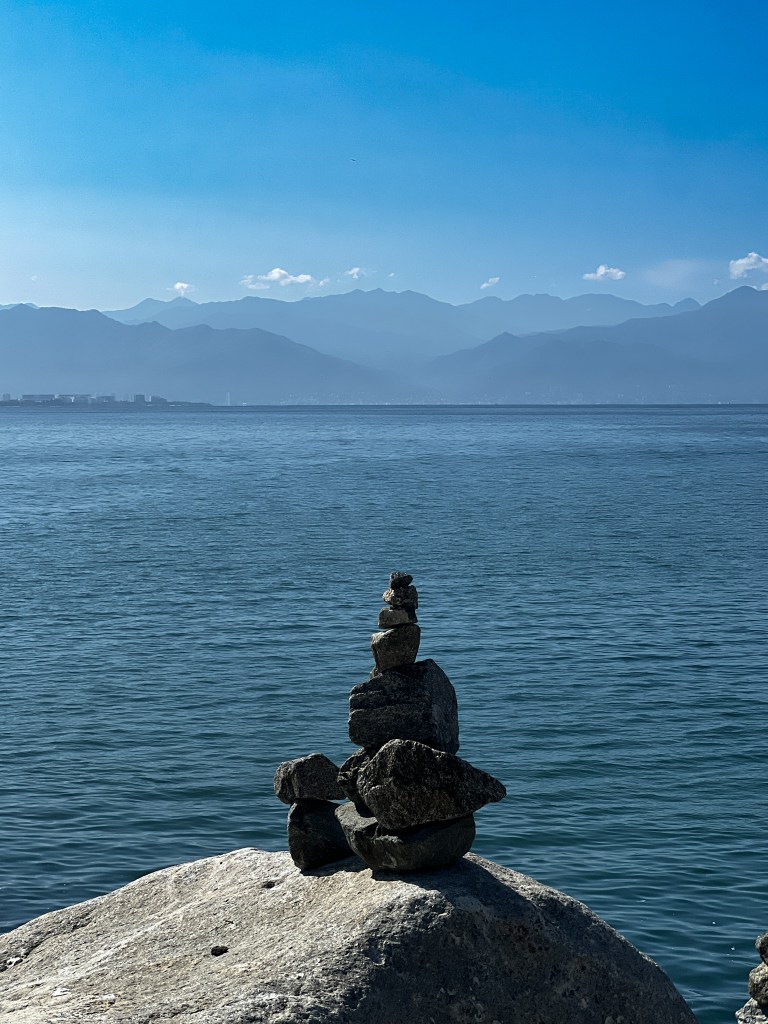
After spending months in the U.S. supporting my mother through her terrifying diagnosis of two brain tumors, I returned to Mexico feeling like a shell of myself. Sleep had been elusive for weeks—when it did come, it was restless, interrupted by racing thoughts and sudden insights that surfaced in the dead of night. During a session with my psychologist, I learned that I met the DSM-V criteria for insomnia. Though my struggle with sleep had begun about a year earlier, it had recently intensified into an unrelenting force, significantly impacting my quality of life.
But sleep wasn’t the only thing affected.
I was working. A lot. I’ve never really had a problem working; in fact, I rather enjoy the structure and routine of my work as a technical writer. But I found myself becoming obsessive about it, finding little errors or small details and making them into BIG things. I worked more hours, and when I would try to sleep, I would think about work: less at first, but more and more as sleep began to elude me.
You know what they say about all work and no play. I knew I wasn’t going off the deep end, but I found myself withdrawing from friends, ignoring messages, and avoiding conversations. Even when people checked in, I struggled to respond. This wasn’t like me. I hated leaving people on read, yet I felt like I had nothing to say. It had been years since I felt this way.
Why does this happen to me, when I spend so much time in the US?
The Exhaustion of Perfectionism
The lifestyle in the U.S. forces me into a familiar trap: work harder, do more, be better. Somehow, American culture drags out of me something I have spent years trying to bury, exorcise, and leave behind—perfectionism.
It’s an all-consuming force that doesn’t just steal the days from my life but the life from my days.
This is what perfectionism does. It hijacks logic. It creates chronic stress and burnout. It blocks my creativity and prevents me from living an authentic life. It’s a cycle of never enough, when really, our goal should be “good enough”.
I naturally love to wake early and work, but in the U.S., this turns into something unhinged—something unhealthy. I like to go to bed early, like be in bed around 8:30 pm and asleep by 9 pm. Recently, I went to bed at 8 pm. and woke up at 11:30 pm, wired and ready to work. I tried to resist, but after a couple of sleepless hours, I gave in, creeping downstairs to my study, beginning my day’s work in the dead of night. While I drank my morning coffee and working around 1:30 am, I imagined some young kids (probably some of my coworkers even) just leaving a bar, grabbing a coffee at the local Waffle House.
But I can’t blame the U.S. entirely. These drives—to work more, exercise harder, eat cleaner, look younger, accomplish more—are deeply embedded in me. It’s a sickness I have to fight against. I really feel that they are ingrained in our U.S. culture. But in the U.S., I just can’t seem to control it.
Then, I return to Mexico.

Stepping Off the Plane: A Shift in Reality
The moment I stepped off the plane, I felt the difference.
The sun beamed down on me, welcoming me home with its golden warmth. The air smelled lighter—was it the salt? Can air be alkaline? I made a mental note to ask ChatGPT later.
(Sidenote: Turns out, YES! The air near the ocean if filled with tiny droplets of seawater, known as sea spray aerosols, which contain salt and other minerals. But while it has a pH of 8.1, this reportedly won’t affect your body’s pH.)
But it wasn’t just the air that felt different—it was me.
I stood there, waiting for my ride to pick me up, realizing my breathing was shallow and uneven. I expanded my lungs, taking in deep, salty air, and reminded myself to just breathe.
Then, a memory from the night before surfaced—a dream I couldn’t quite remember, but whose message had stayed with me:
Life in the U.S. sucks me into a pattern of prioritizing things that don’t really matter.
I knew it was true.
In the U.S., I become consumed by workaholism, perfectionism, and materialism. They act as distractions—smoke and mirrors designed to convince me that my life is meaningful simply because my schedule is full.
An accomplished day in the U.S. may look something like this to me:
- I crossed 50 things off my to-do list.
- My dogs got a walk.
- My house is immaculate.
- I worked for 8 hours.
- I worked out for two hours.
- I cooked a perfect homemade meal.
- I slept only four hours—and wore it like a badge of honor.
- I am current on all of my emails.
But this list of accomplishments does really reflect what I want to say about my day. Looking over a day like this, I ask myself what I enjoyed the most. What I love most is being active and being in nature. Being active in nature is literally the best. Being in nature helps to keep me grounded and centered. It’s relaxing, and it’s healing. It’s powerful.
When I look over the list, what I notice is missing from this list are personal communications. Returned texts? Phone calls to stay in touch and stay connected? Coffee dates? Yoga classes? Things are prioritized on my list, not people. And it is the things that we do each day that become the life that we live; this IS our life. Things. Not people.
And for what?
It’s crazy-making behavior. We become obsessed with the doing and not with the being. Which then gets distorted, and we start to equate doing enough with being enough. And that is where the insanity lies; when we believe our worth is caught up in what we do and accomplish, we have really lost it.

Mexico: A Lesson in Imperfection
Returning to Mexico allowed me to reconnect with something I had lost while being in the U.S. for an extended time.
Balance.
It’s here that I started to realize how much the demands of perfectionism had taken hold of me. Unlike in the U.S., where work and ambition constantly drive me, here in Mexico, there’s a more laid-back rhythm to life.
In Mexico, I find it easier to ascribe to the “good enough” standard.
The “Good Enough” Standard
I’m not sure where I first read or heard the phrase, but the idea of a “good enough” standard has really stuck with me as a powerful tool for managing perfectionism. Instead of obsessing over making everything perfect, why not aim for good enough?
For me, my personal “good enough” standard comes down to a simple question: “If I were a teacher grading this project, report, or assignment, what grade would I give it?”
If the answer is an A, then for me, it’s good enough. I’ve started using letter grades as part of this strategy because they help me qualify my work rather than quantify it—a subtle but important shift that’s made it easier to let go of the need for perfection or exactness.
Lifestyle is So Different
I still love working, but I demand balance from myself.
I create space for creativity, rather than just focusing on output.
I slow down enough to listen to myself.
In the U.S., I obsess over my imperfections—the wrinkles forming on my face, the pounds on my body, the quality of food that I am putting in my body, and the efficiency of my work. I let perfectionism consume me to the point that I forget the truth: life, in it’s raw form, isn’t polished.
And that’s what I love about Mexico. There is no illusion of perfection.
Seeing Reality
In Mexico, there is no veil. Life is suffering, and you see it everyday—raw, unfiltered, and oftentimes heartbreaking. It’s one of the most difficult aspects of living in Mexico, at least for me.
- Government inefficiencies
- Corruption at ALL levels
- Human rights violations
- Lax labor laws and a shockingly low rate of pay
- Human exploitation
- Animal cruelty
- Food instability
- Domestic violence
- Low levels of common education
Now let’s be honest, these things exist everywhere, but in the U.S., they are often hidden behind a carefully curated facade. It’s not that they don’t exist: we are just hidden by the prevalence of such existence, thereby failing to realize the extent of the problems.
In Mexico, they are out in the open. Unapologetic. Real.
I need that. I need REAL. I don’t love it, it’s hard to see and deal with at times. But I don’t want to live a veiled life either. I’d be like Neo; I’d take the red pill.
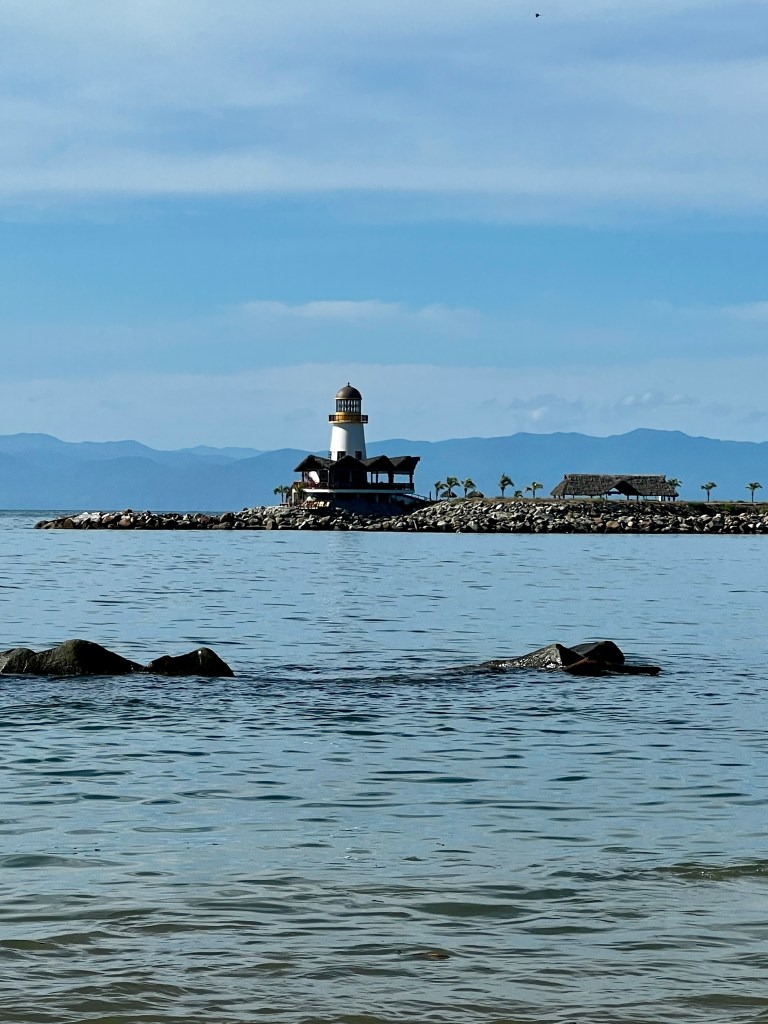
Imperfection as Truth, Imperfection as Freedom
When I see life as it really is—flawed, messy, human—I feel grounded. In Mexico, there’s no need to keep up the illusion. There’s no race to prove I am worthy. Instead, I can measure my life against my own reality, not against an impossible standard I will never reach.
In the U.S., I can never do enough.
In Mexico, I am enough.
In the U.S., I feel like I’m constantly compared to invisible, unattainable, and potentially self-imposed standards—where success is measured by exhaustion, and self-worth is determined by productivity.
In Mexico, I just exist. And that is enough.
The Beauty of Letting Go
Maybe that’s the real lesson in all of this:
The real freedom is in being enough. We aren’t meant to be perfect. Life isn’t meant to be perfect. And the more we chase perfection, the further we get from actually living.
I don’t know if I’ll ever fully free myself from the grip of perfectionism. But I do know this—Mexico reminds me everyday that perfection isn’t the goal. The goal is to live—an imperfect, messy, and authentic life.
In Mexico, I don’t have to prove anything. Here, I can breathe, find balance, and just be. Here, I am free.
I hope that, wherever you are, you can take a moment to breathe, let go, and embrace what’s good enough in your own life, too.
How do you navigate the balance between work, perfectionism, and well-being in your life? Have you ever felt trapped in the cycle of constantly striving for perfection? I’d love to hear your thoughts and experiences! Drop a comment below or connect with me on social media.
 Gringa in Mexico
Leave a comment